
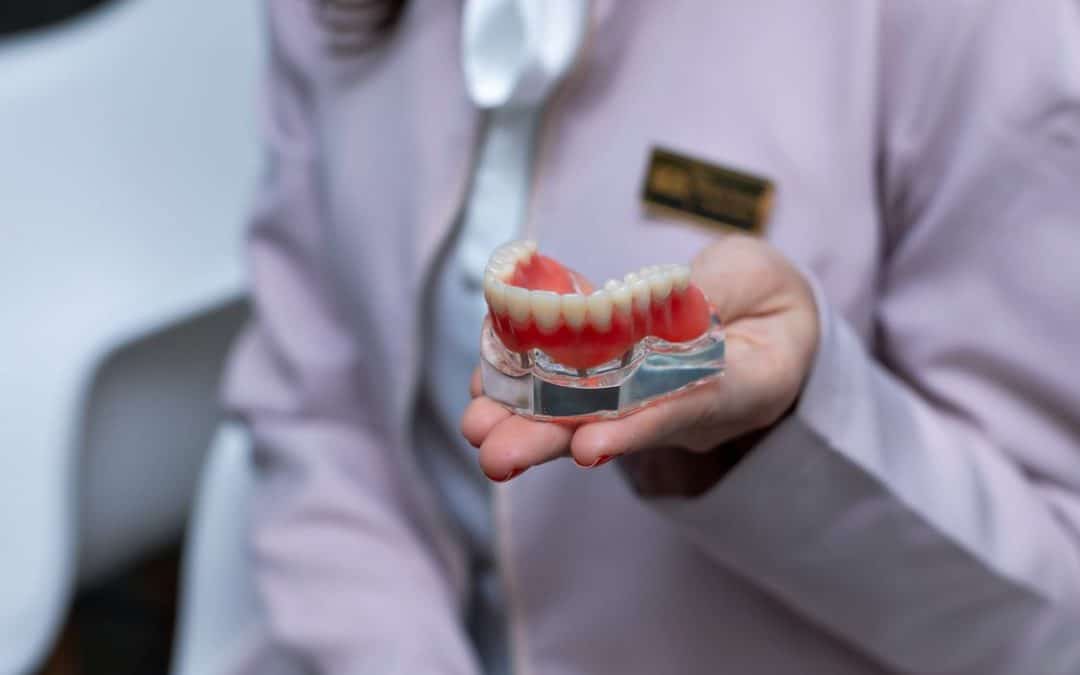
A denture is supposed to make life easier, not leave the mouth raw. Yet a surprising number of wearers quietly live with sore spots, irritation, and inflammation, often chalking it up to something they simply have to tolerate.
They do not. Most of that discomfort is a fixable signal about how the appliance is fitting, and ignoring it tends to make matters worse.
How Common the Problem Really Is
The numbers are higher than most people assume. A 2025 retrospective study of elderly denture wearers found that more than a third had denture-related oral lesions, and the figure climbed with the age of the appliance.
Among people who had worn the same dentures for more than a decade, the lesion rate rose to nearly 55 percent. Complete-denture wearers fared worse than partial-denture wearers, a difference the researchers tied to the larger area of contact and longer wear.
Denture stomatitis, an inflammation of the tissue beneath the appliance, is the most common of these problems. Broader reviews put its prevalence across denture wearers in a wide band, but consistently high.
The pattern across studies is hard to miss. The longer a denture stays in service without adjustment, the more likely the mouth underneath it is to suffer.
Why Fit Sits at the Center of It
These lesions are not random bad luck. Ill-fitting dentures are a recurring thread running through the research.
When an appliance no longer sits snugly, it shifts and rubs during eating and speaking. That repeated mechanical irritation inflames the tissue and creates openings for microbial growth.
An old or poorly fitting denture also traps debris and moisture against the gums, an ideal environment for the organisms behind denture stomatitis. Poor cleaning habits compound the problem, but fit is frequently the underlying driver.
The mouth, in other words, is reporting on the hardware. Persistent sores are less a hygiene verdict than a fit problem asking to be addressed.
The Case for Acting Early
The instinct to wait it out is understandable and usually wrong. Minor irritation left alone can progress into more stubborn lesions and tissue changes that are harder to reverse.
Catching it early generally means a straightforward fix. An appliance that has loosened or worn can often be repaired, adjusted, or refitted rather than replaced outright.
That distinction matters for cost and comfort alike. A timely repair restores fit and lets the inflamed tissue settle, while delay can push a patient toward a full remake.
There is also a quality-of-life dimension. Constant low-level soreness wears on a person’s willingness to eat normally and speak freely, and resolving it tends to bring an outsized improvement in daily comfort.
What the Sores Are Really Telling You
The lesson buried in the data is that denture discomfort is information, not an inevitability. A denture that hurts is usually a denture that has stopped fitting the way it should.
That is good news, because fit is something professionals can correct. The mouth changes over time, and appliances are meant to be maintained, not endured until they fail.
For anyone resigned to chronic sore spots, the takeaway is simple. Those sores are a prompt to have the fit checked and the appliance repaired, not a permanent feature of life with dentures.
Four in ten wearers developing lesions is a striking statistic. It is also an avoidable one, and the path to avoiding it usually starts with taking the discomfort seriously enough to get the appliance looked at.