
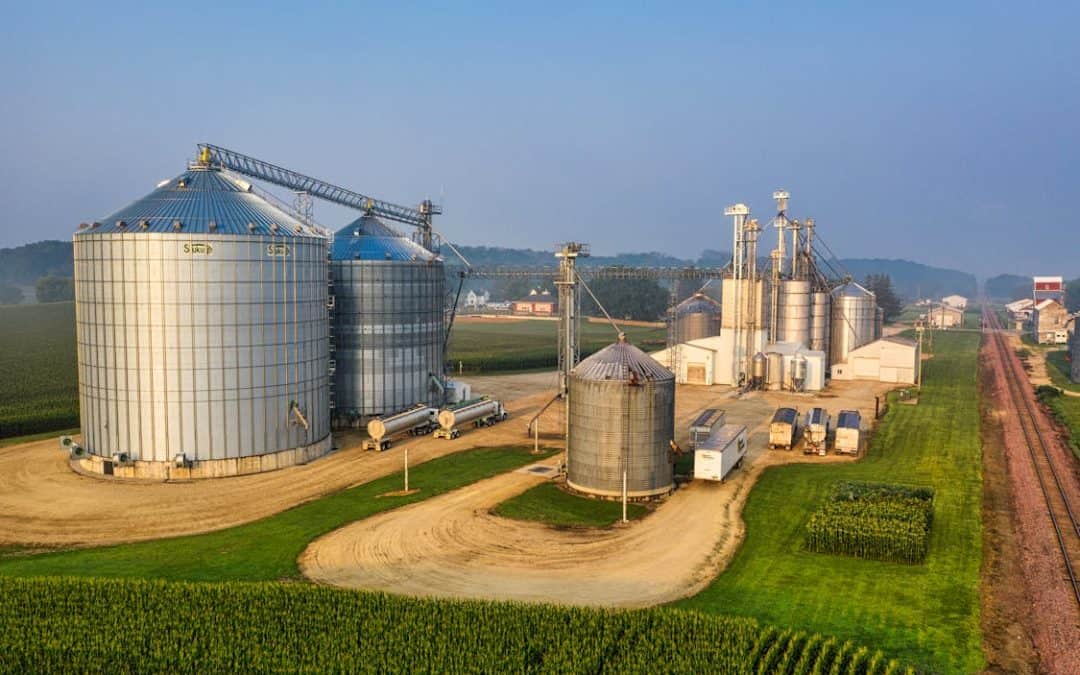
Silos play a central role in storing bulk materials from grain on farms to powders in factories. Selecting the right style of silo can cut waste, save cash, and keep product quality high over time.
Systems vary widely in how they hold material and how they unload it, so a clear view of options helps when planning storage projects.
Tower Silos
Tower silos are vertical structures often seen on farms and worksites, standing tall to use height for storage capacity. They make it simple to feed product by gravity, though filling and emptying may require equipment at roof or base level.
The walls can be concrete or metal, and the choice affects upkeep and resistance to weather. Farmers and operators like them when land is tight and capacity must be stacked upward rather than spread out.
Bunker Silage Systems
Bunker silage systems are low and wide storage areas usually built into earth banks or behind concrete walls, offering large surface area for packing. They are favored for storing chopped forage because workers can compact material with tractors and cover it quickly to limit air exposure.
Management of the face during feed out matters for quality and to limit spoilage at the exposed edge. For large herds or long term feed plans, the scale and ease of access can make a big difference to labor needs.
Silo Bags
Silo bags are flexible tubes made of heavy plastic that accept chopped forage or grain and seal it for fermentation or storage, turning a load into a sealed environment. They can be placed on flat ground and do not require permanent foundations, which appeals to operations with shifting needs or temporary storage demands.
Filling gear pushes material into the bag while crew members manage sealing, and removal happens by unrolling the bag and extracting content. They offer a budget conscious route to airtight storage, though care is needed to avoid punctures and to manage sealing quality.
Horizontal Silos
Horizontal silos include trough long tanks and concrete bunkers that store material along a length rather than in a tall column, which aids in access and staging during processing. These systems are common where building up height is impractical or when moving product laterally is part of the process flow.
They are often used for materials that will be loaded into trucks or processed along the side of the storage unit. Regular turning and monitoring may be needed to avoid uneven settling and to keep product properties uniform.
Hopper Bottom Silos
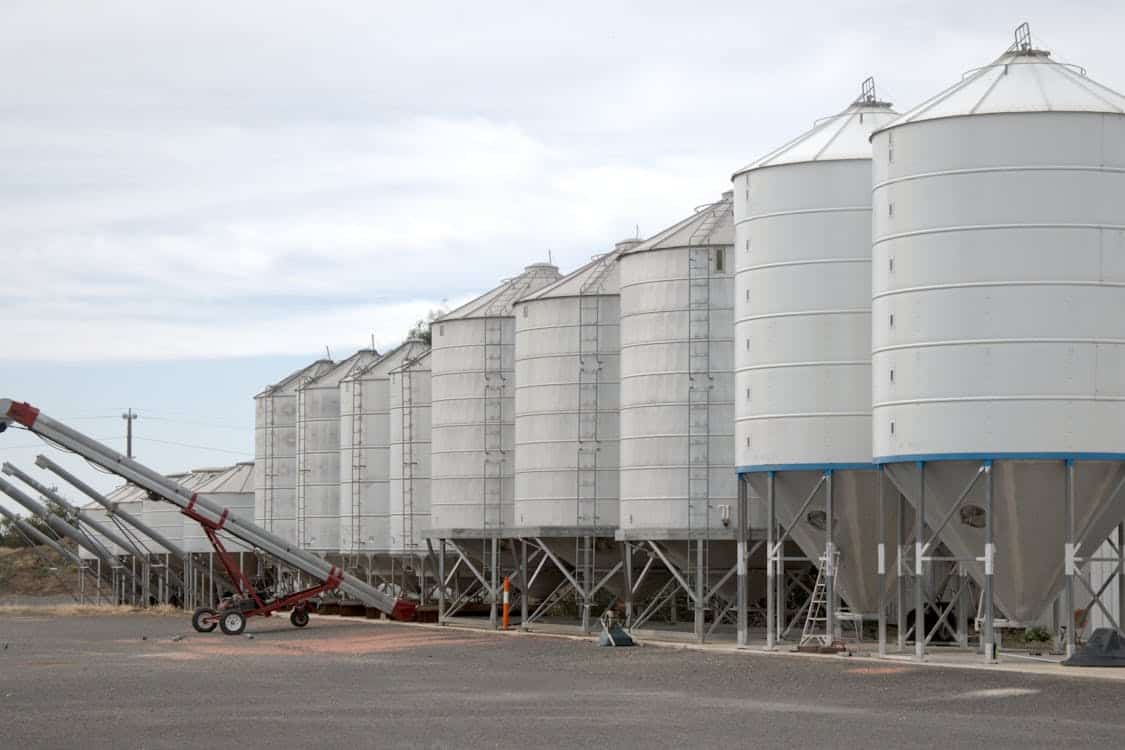
Hopper bottom silos narrow toward the base, forming a funnel that encourages gravity flow and makes full emptying simple when you need it out fast. They are typical in industrial settings where fine powders and granulated goods must be loaded into conveyors or trucks without bridging or hang ups.
The shape helps limit leftovers at the bottom, yet it requires attention to shear forces during loading to avoid compaction at the inlet. For operations with frequent turn over and strict cleanliness demands, the hopper form can save time and reduce waste.
Pneumatic Silo Storage
Pneumatic silo systems use air pressure or suction to move product from trucks or bins into the silo and to transfer it out when needed, offering contactless movement for fragile powders. They reduce manual handling and can lower contamination risks when product cannot touch many surfaces, useful in food and chemical plants.
The setup needs careful control of flow rates and filtration to avoid dust and to keep seals healthy under pressure variations. While the initial gear and controls add cost, the payoff comes with reduced labor and safer handling of fine materials.
Steel Bin Silos
Steel bin silos are modular metal cylinders that come in sizes for small farms up to huge commercial facilities, prized for quick installation and flexible capacity. They can be fitted with aeration floors and temperature monitors, which help protect stored grain from pests and damp pockets.
Steel silo systems are often favored for their strength and adaptability, providing robust, long-term storage solutions in both agricultural and industrial settings.
Corrosion protection and fastening quality are important details that dictate service life and maintenance cycles. When space and speed matter, steel bin options let operations scale up without long construction timelines.
Concrete Silo Systems
Concrete silo systems offer long term durability and thermal mass that moderates interior temperature swings, which can preserve some goods better than thinner materials. Cast in place units or pre cast panels create structures that resist impact and provide stable storage for decades when cared for properly.
Construction takes longer and requires a crew with specific skills, yet the lifecycle cost can be attractive when frequent replacement would be a burden. Owners often trade higher upfront work for predictable performance over many seasons.
Portable And Mobile Silos
Portable and mobile silos let operators move storage to where loading or unloading happens rather than hauling product to a fixed point, and they come on wheeled frames or skids. They fit seasonal operations, remote sites, or short term projects, reducing transport leg work and saving time on site logistics.
Set up tends to be quick, and removal is straightforward when the job wraps up, though capacity is smaller than permanent units. For teams that like to keep options open, mobility is a practical way to match storage to ever shifting tasks.
Aerated And Climate Controlled Silos
Aerated and climate controlled silos add fans, ducts and sensor systems that regulate temperature and moisture, giving operators a higher degree of control over product condition. They are especially useful when storing seed or fine powders that react to humidity and heat, and they help prevent spoilage and pest activity through steady environment control.
The systems require power and some automation, and routine checks make sure fans and sensors continue to work as intended. The payoff comes in longer storage life and fewer losses when conditions would otherwise run away from safe limits.